One Mind Accelerator at Allied Arts Guild
Two one-week programs in Menlo Park. Three rooms live at once and a 500-person investor summit.
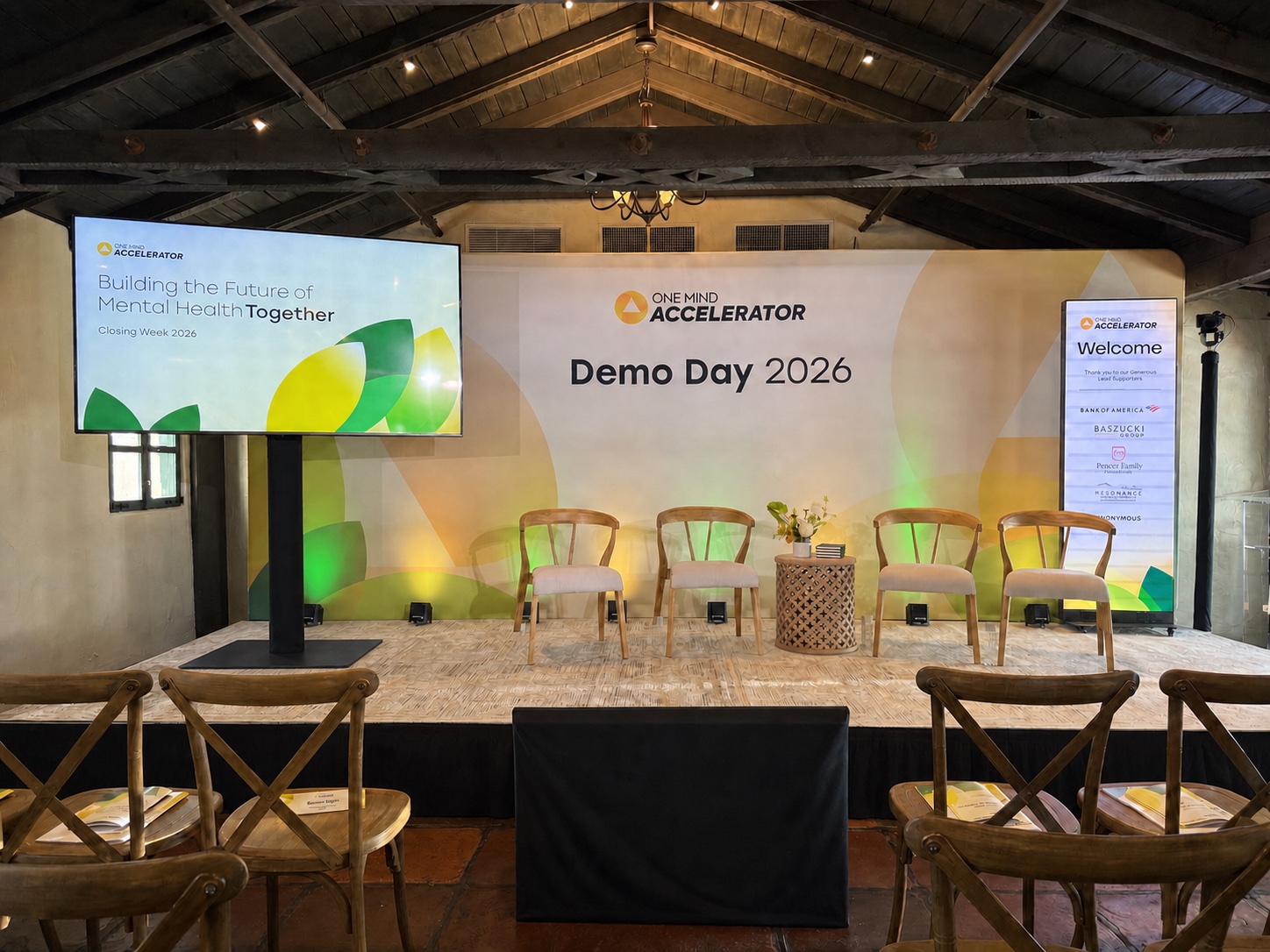
One Mind brought us in to run the AV for their accelerator program, replacing the team that had covered it the year before. Two one-week events at Allied Arts Guild in Menlo Park, a main session, a conference room and an outside tent running together, and a 500-person investor summit at the center of it. They have booked us again for next year, with an LED wall added to the main session.
What the program actually is
Not one room and not one day. Each event runs a setup day and three show days, across six spaces:
- The main session, where the 500-person investor summit happens
- A conference room running its own audio and its own Zoom feed
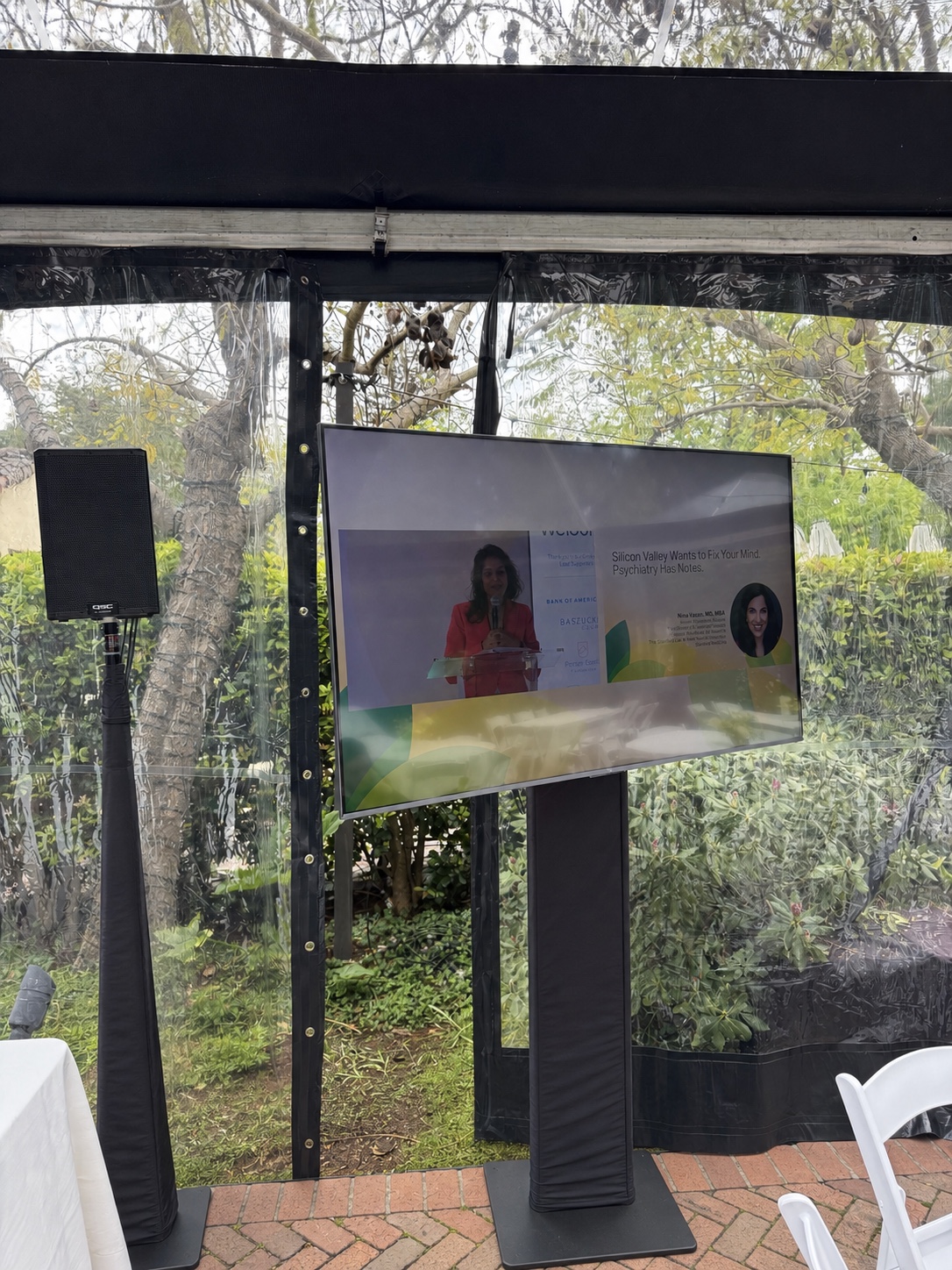
- An outside tent with its own screen
- Two interview rooms, used for capture on a single day
- A dining room for demos, on one day in the closing week
That matters for scheduling more than for equipment. Three rooms live at once needs a crew that can be in three places, and the interview and demo days land on top of that. It also needs a plan for the moment two rooms want the same person.
The room nobody expects
The conference room takes eighteen wireless gooseneck microphones, a webcam, an audio interface with a signal splitter, a playback laptop and a camera.
Eighteen open microphones is a different problem from a keynote. Everyone can talk, so everyone can also make noise. The Zoom feed carries whatever the room gives it. That gets managed at the desk rather than hoped about.
The internet arrives with the crew
The kit list includes a Starlink terminal, two distributed access points and a bonded router.
Most AV quotes assume the venue’s internet works. This one does not. A conference room holding its own Zoom session while the main session streams puts everything on the house line. That line is a single point of failure nobody in the room controls, and it is the most common reason a hybrid session goes quiet. So the connection arrives with the crew, and so does a second path to it.
The same thinking runs through the playback: five machines, and one of them exists only as a backup. Separate computers handle the deck, video playback, Zoom playback and Zoom room management, so a failure in one does not take the session with it.
Who is on site
Eight crew days across the two events, with named roles rather than a headcount:
- A producer
- A technical director
- An A1 on audio
- A V1 on video
- A camera operator
- A lighting technician
- A production assistant
- An AV technician for the dining room demos
The rest of the kit
Recording and post-production run through Luma Creative, our sister company, so the sizzle reel, fifteen interview cut-downs and the multicam session edits are handled in-house rather than subcontracted.
What happened
Nothing.
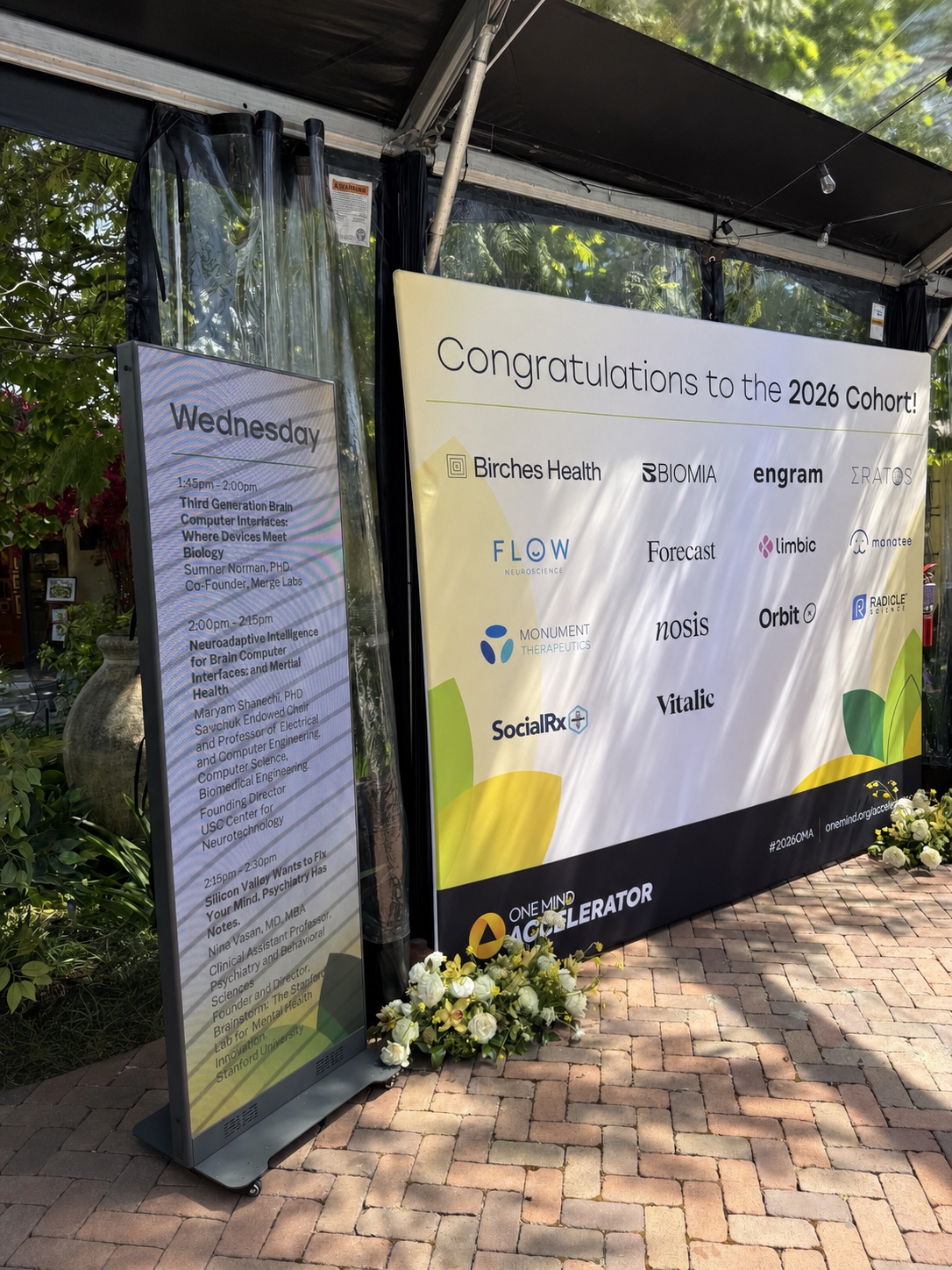
That is the whole outcome, and in this work it is the one worth reporting. Six spaces, two weeks of show days, 500 people in the main session, and no incident anyone had to be told about.
One Mind has booked the program again for next year, and the scope grew rather than held. Next year’s contract adds an LED wall to the main session, in place of projection. A client who renews is one signal. A client who renews and hands you more of the show is a different one.
“500-person investor summit.”
P. Joshi, Director of Events, One Mind Accelerator
If you are running something similar
The thing to sort out early is not your equipment list. It is which of your rooms are live at the same time, who is presenting remotely, and what the internet is actually going to be on the day.
Get those three settled and the kit list follows. Get them wrong and no amount of equipment fixes it.
If you have a venue and a date, that is enough for a walkthrough before anything is quoted.
Talk to us about your event on the contact page.