Cellares: their first hybrid event
Cellares had been running these sessions as Zoom webinars, virtual guests only. This one had a panel, a room in New Jersey with more than 50 people in it, and a stream carrying the whole thing to more than 2,000 others. Westwave AV planned and ran the cameras, the audio and the stream going out of the room.
- ClientCellares, cell therapy manufacturing
- EventHybrid panel, their first with a live room
- In the room50+
- On the stream2,000+
- CamerasThree PTZ
- ConnectionStarlink and two carriers
What changes when you put a room in front of a webinar
The short answer is that the job gets harder and the event gets better.
A webinar has one audience. Put 50 people in front of the panel and you have two, and they want different things. The people at home stop watching slides and start watching a room, and a room shows every shortcut you took setting it up.
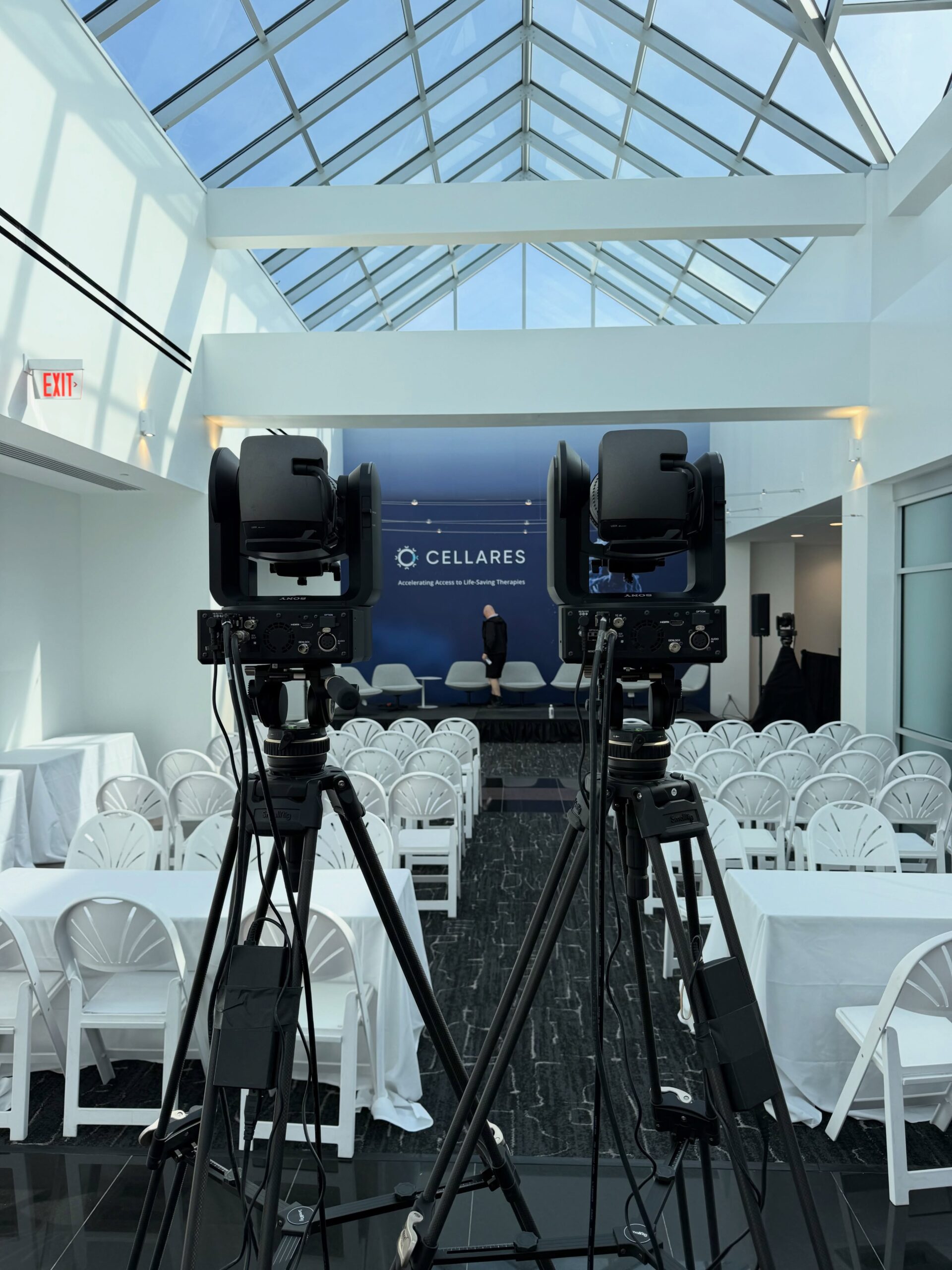
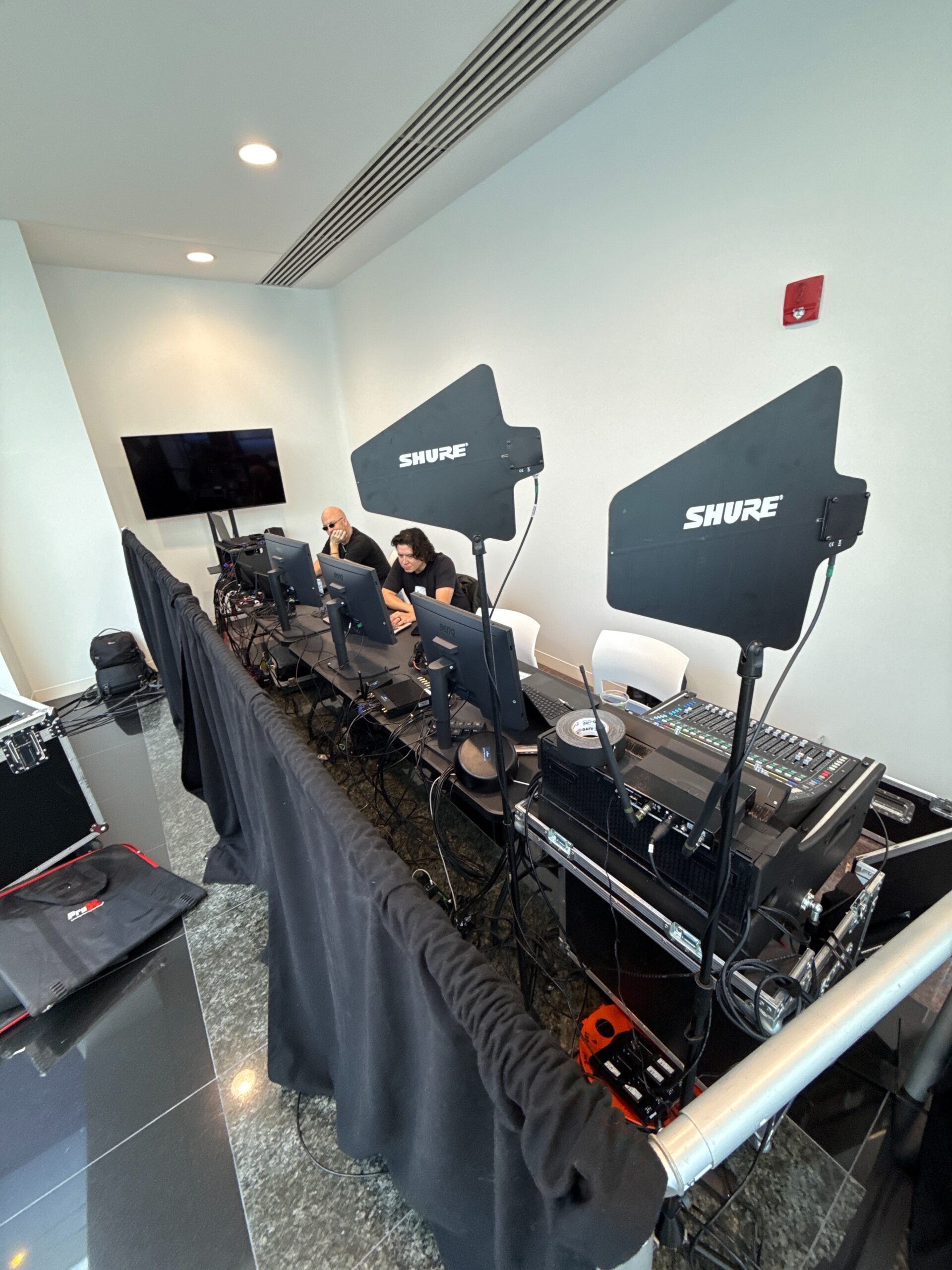
Three PTZ cameras covered the panel. That’s the right answer in a room that size, because the heads move on a remote and shots change without anyone walking across the floor in front of seated guests. Front of house ran a mixing desk, monitors and two Shure antenna paddles for the wireless.
The audience you can’t see is usually the bigger one
More than 50 people were in the room. More than 2,000 watched the stream.
You plan an event around the room, because the room is the part you can walk into and count. The bigger number was on the stream, and that’s the one that decides how much production a panel gets.
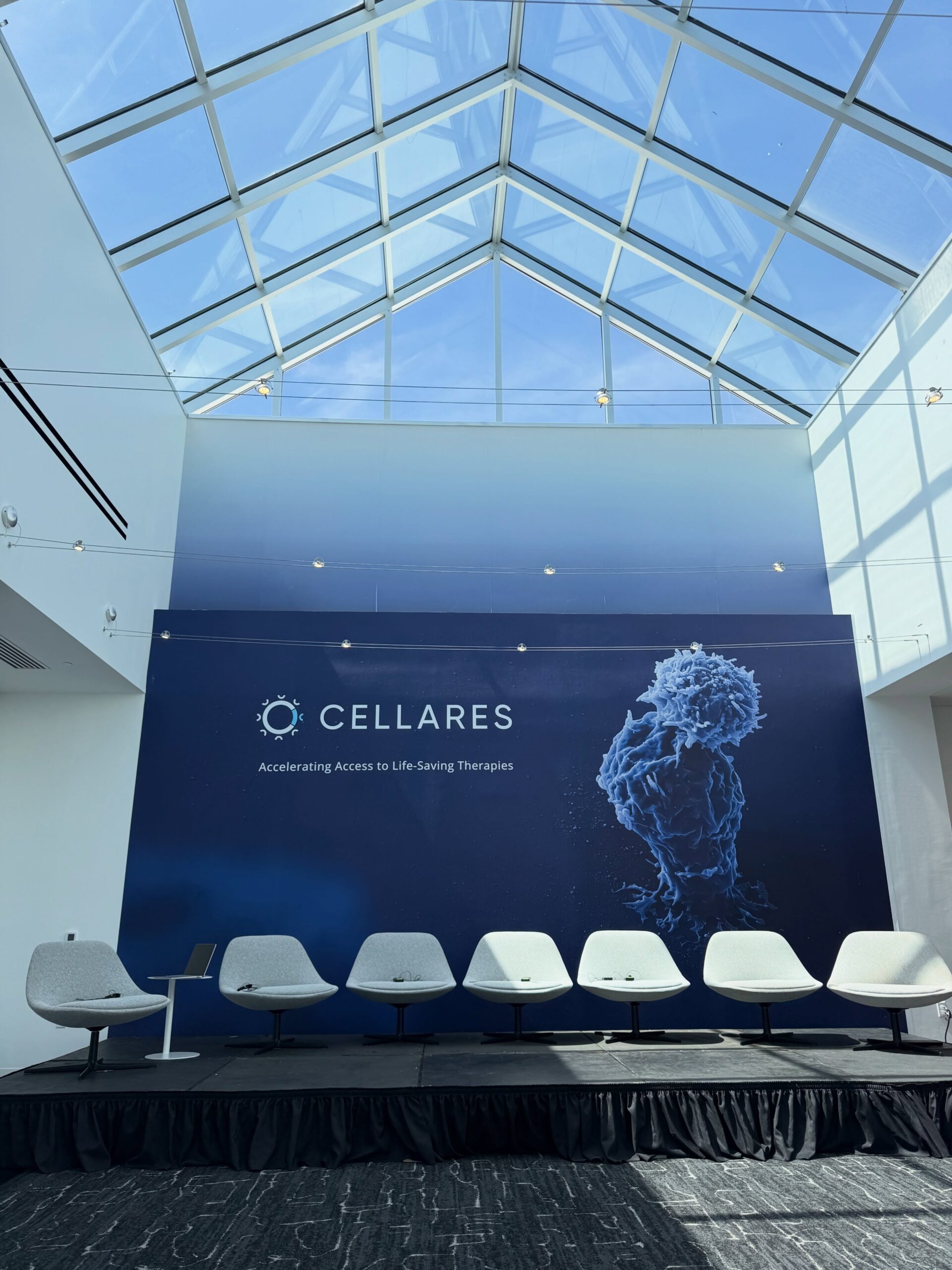
Cellares is an Integrated Development and Manufacturing Organization, an IDMO, in cell therapy manufacturing. This session faced outward, which is why the count at home ran so far past the count in the room.
What it takes to let remote guests take part
Viewers at home could interact with the panel.
For that to work somebody has to be reading what comes back off the stream for the length of the session, and that person can’t also be running the show. A remote audience that takes part costs you a seat at the desk.
What happens if the connection drops
A stream has one dependency you don’t own, and it’s the venue’s internet.
So we built the connection out of three independent ones: a Starlink outside, two cellular SIMs running on separate carriers in AT&T and T-Mobile, and a phone standing by as a third hotspot.
Two SIMs on the same carrier fail together, so they went on separate networks, and Starlink is in there because satellite and cellular don’t go down for the same reasons. Everything else about a stream can be rehearsed, and this is the one part that can’t, so it gets redundancy instead of a rehearsal. William Cook’s shorthand for it is that you’re really just building a big pipe.
Who was on site
The team:
- A show caller
- A technical director
- A graphics operator
- A PTZ operator
- An audio tech
- General AV technicians
The show caller holds the run of show and calls what happens next. The technical director makes it happen. Splitting those two jobs across two people is most of what keeps a stream from reading like a video call.
If you’re planning your first hybrid event
Count the audience that won’t be in the room before anything else, because that number is what turns a webinar with chairs in front of it into a produced event, and it is what hybrid event services are priced against.
Then work out what those people are there to do, because an audience that gets to ask questions is one more person on the crew list for the whole session.
And ask the venue what the internet actually is, not what the sales sheet says it is. Then ask what your stream does if it drops.
If you’ve got a venue and a date, that’s enough for a walkthrough before anything gets quoted.
Talk to us about your event on the contact page.